

COACHING
Executive and Team Coaching
Simply speaking, we help maximize the effectiveness of individuals and organizations by helping them improve their ability to lead, work together, identify and develop those with leadership abilities. To accomplish this goal we work with top management to assess and establish the appropriate management structure and staffing to meet projected client/customer needs. Once identified, we can introduce team building and individual skill development, enabling the team and individual contributors to meet those needs. The CED offers support, encouragement and structure to develop strategies for success.
Coaching specialties include:
✓ Individual coaching – Designed for an organization’s director or executive director. This type of leadership coaching enhances the quality of leadership of an individual, ultimately enhancing the workings of the entire organization.
✓ Group coaching – Designed to address executive staff or boards of directors in a variety of areas.
✓ Organizational coaching – Works to support all levels from executives to team members to improve efficiency in the organization.
✓ Diversity coaching – Coaching can be tailored to address individual leaders, executives or staff. This specialized coaching is designed to educate and create awareness about diversity and inclusion in an organization. Learn how to move past tolerance to appreciate, value, and make the most of cultural differences in your environment
✓ Executive Performance Coaching – is a professional process that links individual effectiveness to organizational performance. It is a strategic tool that helps organizations attract and retain top talent, enables executive teams to improve leadership performance and employee productivity, and supports senior executives responsible for making crucial business decisions and achieving outcomes. It also serves as an insurance policy to minimize the risks of organizational change.
Our services include:
⚫Competitive Advantage Coaching ⚫Stretch Assignment Coaching ⚫Coaching High Potential Individuals ⚫Coaching Performance Issues – Executive Derailment Turnaround ⚫Developing Leadership Skills.
Transition Management
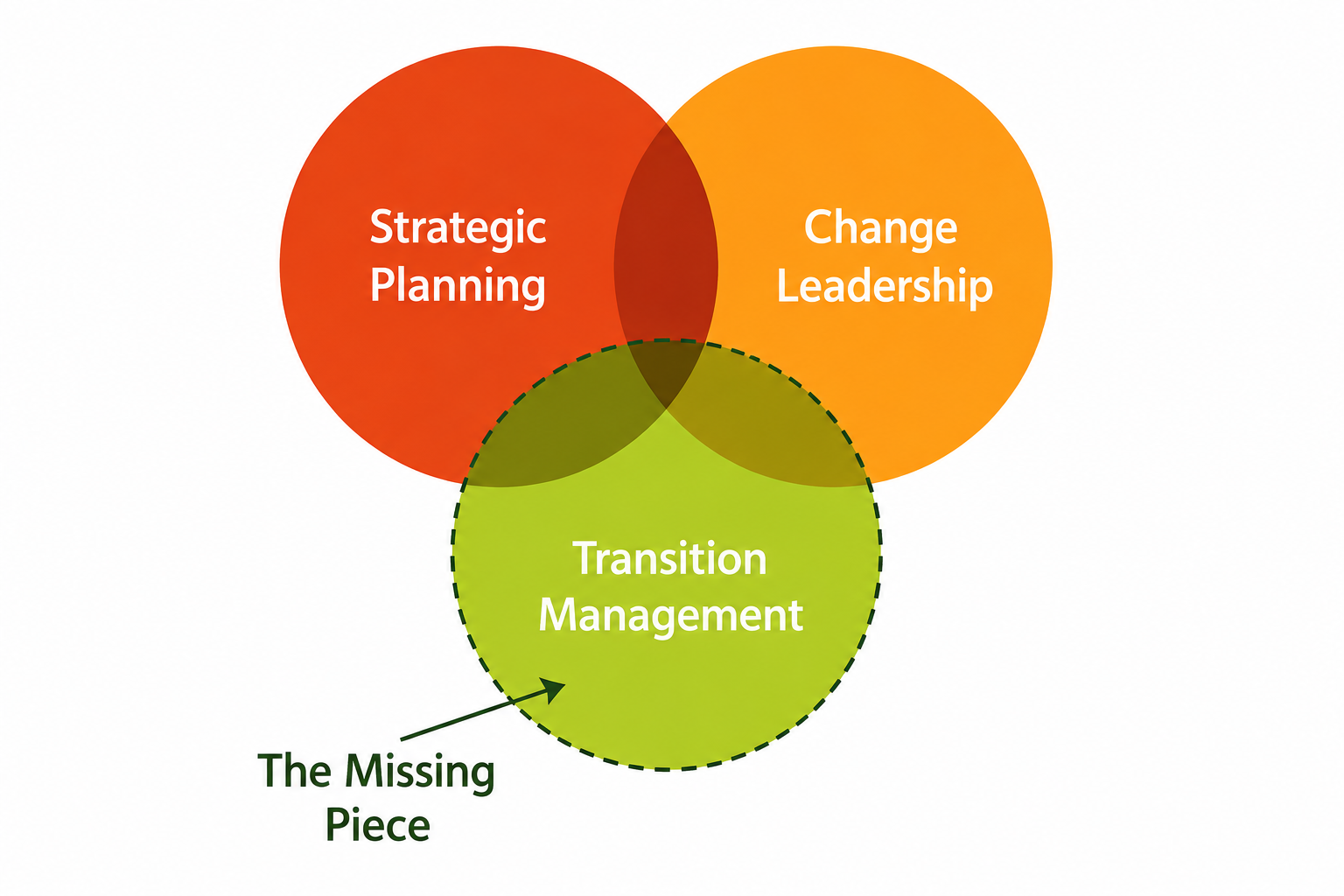
The acquisition process is a set of processes for managing change. A manager already understands that all businesses are continually changing to maintain and improve their competitive position and profit performance. The role of manager includes the responsibility for initiating change and ensuring that the changes are managed and implemented in a timely effective manner
Following mergers and acquisitions, employee-related issues principally stem from the cultural differences between the two organizations. The corporate culture is deeply rooted in an organization; thus, changing that culture can be difficult. The relationship between the managers and the corporate culture has an impact on the organization and affects the organization’s ability to achieve its objectives.
The new work environment will be complex, but successful managers have the ability to shift gears and move from situation to situation to meet the demands of the organization. A key difference between a successful and an unsuccessful manager in a newly acquired organization is the manager’s ability and skills to adapt to the workplace after the acquisition.
At the end of the training process, the organization should gain:
✓ An understanding of the post-merger realities
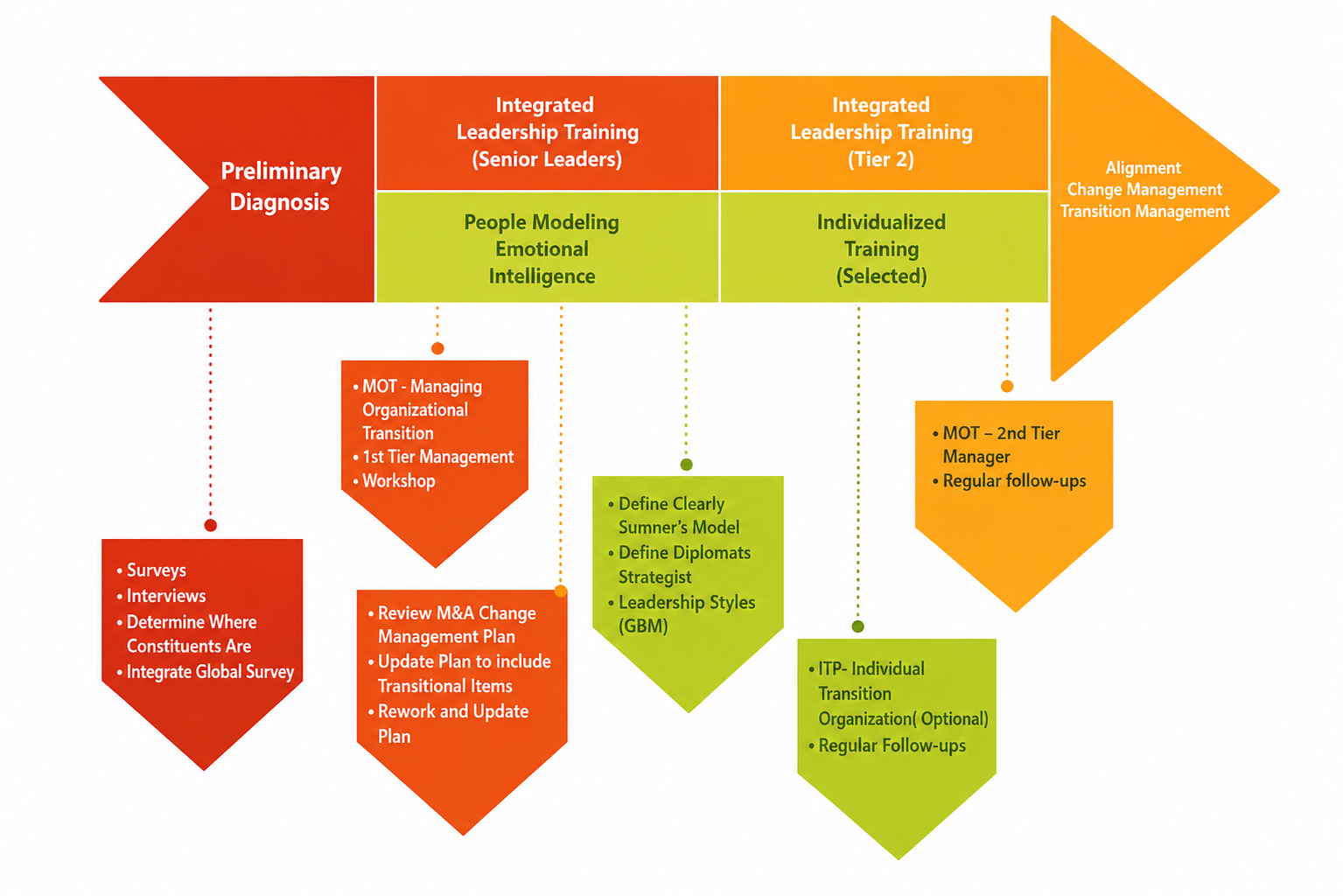
✓ Training of Senior Management on the differences between Change Management and Transition Management
✓ Prayer in inner healing ministry.
✓ Training of Senior Management in preparation for guiding associates through the transition.
✓ Training for individuals on the processes and steps during the transition
✓ Utilization of the William Bridges Transition Framework to guide the individual to increase the current work performance
✓ Development of an appropriate communication plan.
✓ Alignment of the Change Management Plan with the Transition Management Plan.
Transition Management Process:
Burnout Management
Burnout is more than feeling blue. It is a chronic state of being out of sync at work, and, if unaddressed, it can develop into a significant problem in our daily and work lives. As defined by Mind Garden, Inc., burnout is lost energy, lost enthusiasm, and lost confidence.
The key to addressing burnout is understanding oneself. The individual must also fully comprehend that one cannot push oneself beyond unattainable limits.
Understanding Burnout
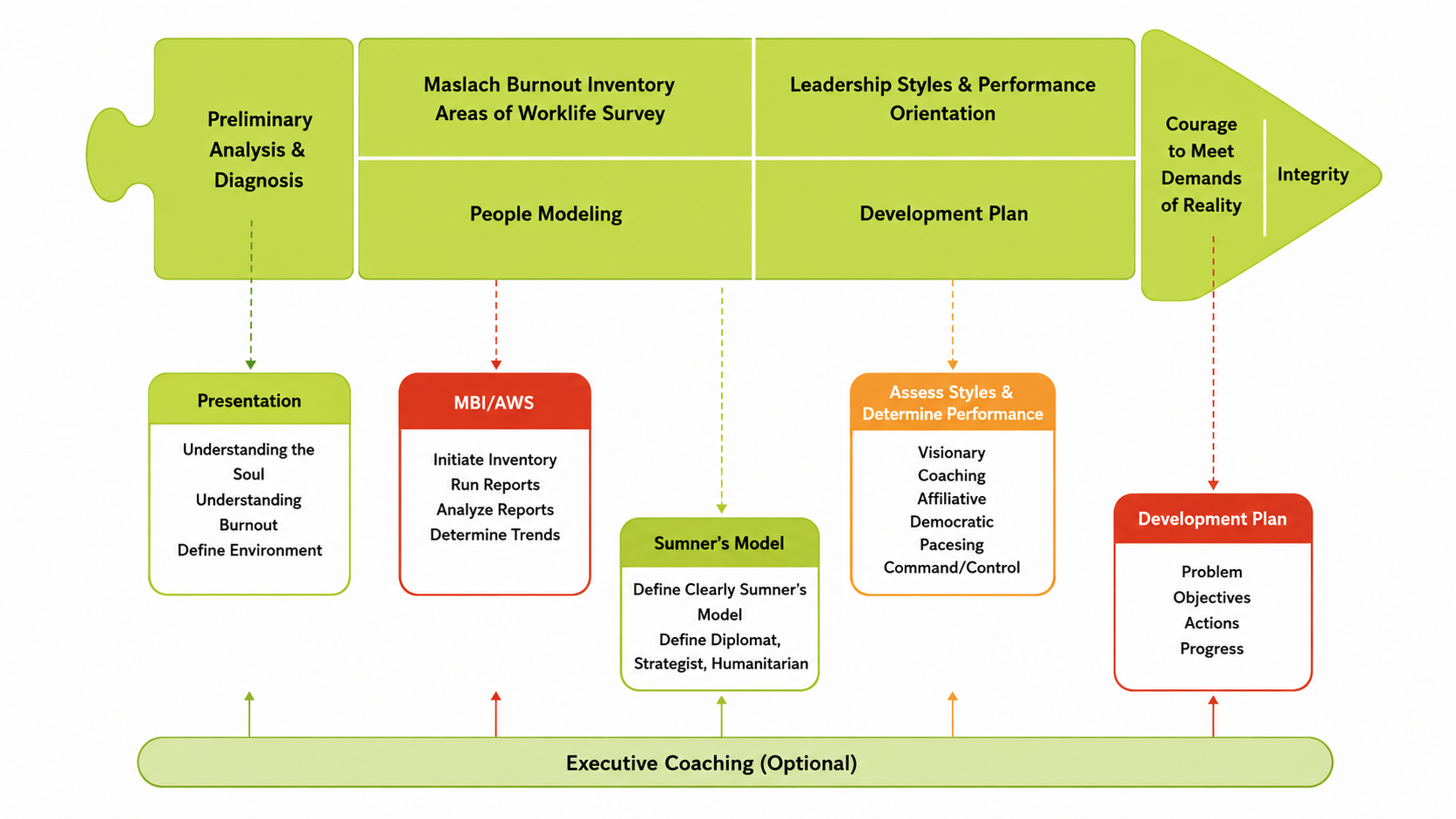
Once we gain a clear understanding of who we are, we must look at burnout from the context of the Maslach Burnout Inventory (MBI) and the Areas of Worklife Survey (AWS).
MBI
✓ Exhaustion ✓ Cynicism ✓ Professional Efficacy
AWS
✓ Workload ✓ Control ✓ Reward ✓ Community ✓ Fairness ✓ Values
At the End of the Training Process:
✓ Understanding what Burnout is
✓ Understanding the Symptoms of Burnout
✓ Understanding Performance Orientation
✓ Defining and integrating Leadership Styles
✓ Defining and integrating Leadership Styles
✓ Reviewing the Group Burnout Report
✓ Developing Action Plans
Burnout Management Process :

Emotional Intelligence, Strategic Planning, Transition Management and Burnout Management are the focus of our enterprise. Our intent is to lead organizations and their associates towards the fullness of what they are uniquely designed for, leading to optimal living for all team members.
OUR SERVICES
Leadership Services
Strategic Planning
EQ Certification
GET IN TOUCH